Releases need a maintenance window and crossed fingers
Shipping anything means scheduling downtime and hoping nothing breaks.
Every deploy means a late-night window, a rollback plan nobody's confident in, and a team that finds out something broke from a customer, not a dashboard.
The signs usually show up in day-to-day work long before anyone names the problem.
Shipping anything means scheduling downtime and hoping nothing breaks.
The support queue fills up before anyone internally notices something is wrong.
When a release goes wrong, undoing it is its own stressful, improvised process.
After an incident, the post-mortem spends longer reconstructing events than fixing the cause.
Without an automated, tested pipeline, every release is a manual sequence of steps someone has to get right under pressure. The risk isn't the code, it's the process around shipping it.
This is usually planning debt, not a skills gap. Deployment and infrastructure practices got built fast to hit an early deadline, and the team never circled back to automate what was done manually the first time. As the product and the team grow, every one of those manual steps becomes a bigger liability, because more people and more changes are moving through the same fragile process. Left alone, the cost compounds:
Releases slow down as the team gets more cautious about a process it doesn't trust.
Outages take longer to detect and longer to resolve, extending customer impact.
Engineers spend more time firefighting and less time building, and incident fatigue sets in.
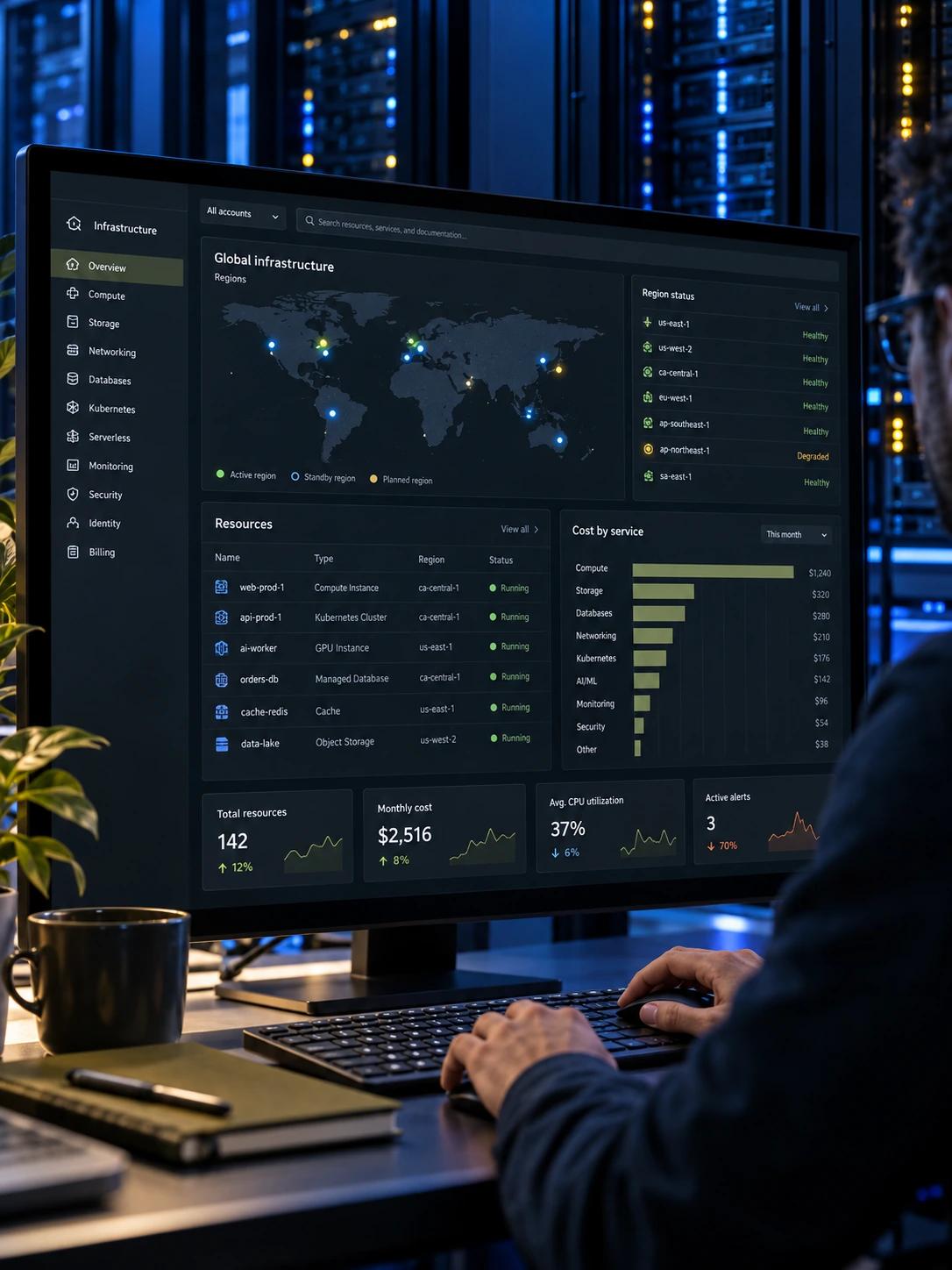
We design CI/CD pipelines around how your team actually works, so releases ship with fewer incidents and without a maintenance-window ritual.
Terraform, Pulumi, or CloudFormation turn manual configuration into version-controlled, auditable code, so a rollback is a known, tested action, not an improvisation.
Logging, metrics, tracing, and alerting are tuned to surface real problems, so your team sees an issue before your customers do.
We leave your team with a system they understand and can maintain, not a black box that only works while we're involved.
What day-to-day work looks like once the fix is in place.
Tell us about your last rough release, and we'll show you what the automated version looks like.