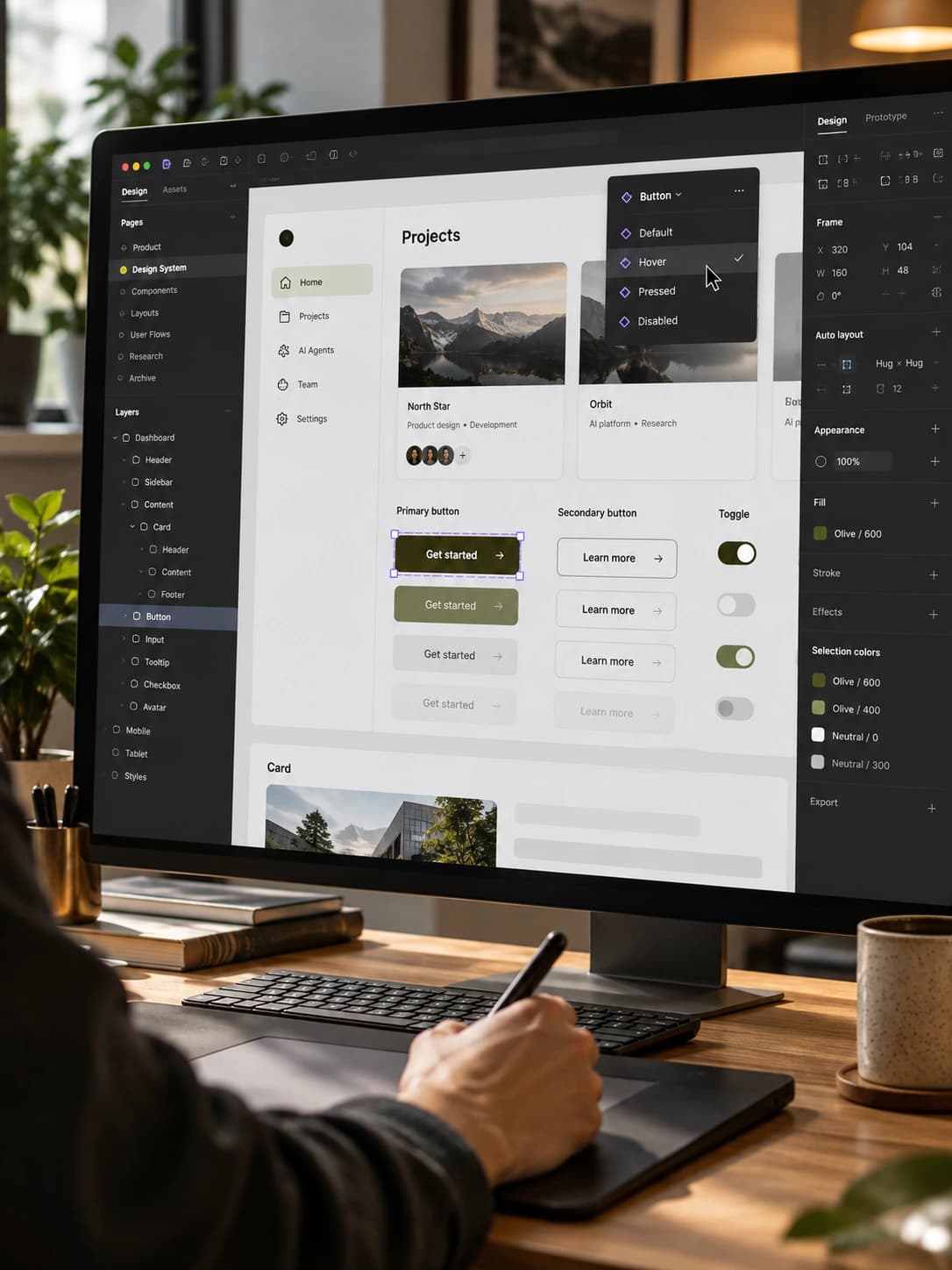
Every screen is built from scratch
Designers and engineers rebuild the same button, modal, and form pattern each time.
Every new screen gets built from scratch, and every release pays for it.
The signs usually show up in day-to-day work long before anyone names the problem.
Designers and engineers rebuild the same button, modal, and form pattern each time.
Because, in practice, it was, with no shared rules connecting the parts.
Spacing, states, and interaction bugs repeat release after release.
There's no single source of truth for what a component is supposed to look like or do.
Without a component library, each new screen starts from zero. The same spacing, state, and interaction decisions get made, and sometimes made differently, every single time.
Without a shared design system, every designer and every engineer makes small independent decisions about spacing, colour, and component behaviour. Those decisions diverge quickly, and the gap between the design file and the shipped product widens with every release until rebuilding becomes the default way of working.
Every new feature re-solves problems the product has already solved elsewhere.
Engineering time goes into rebuilding instead of shipping new value.
Users experience a product that feels inconsistent, and less trustworthy for it.
We map where current screens and components have already diverged, with evidence, not opinion.
A shared component library and design tokens that align product, design, and engineering on one source of truth.
New screens are composed from the system, not built from scratch, so consistency scales with the product instead of eroding as it grows.
The system is tested against real use before full rollout, so it holds up in practice, not only in the design file.
What day-to-day work looks like once the fix is in place.
Tell us where the inconsistency is costing the most time, and we'll scope the system that fixes it.